
Introduction
The Hyperloop is no longer just a concept; it has become a tangible reality with recent test runs demonstrating the potential for passenger travel at astonishing speeds of 700 mph. This innovative transportation system promises to transform how we move between cities, significantly reducing travel times and reshaping our understanding of long-distance transit. In this article, we will delve deep into the mechanics of the Hyperloop, its historical context, technological advancements, and what the future might hold for this revolutionary mode of transport.
Understanding the Hyperloop
Originally envisioned by Elon Musk in 2013, the Hyperloop is designed to operate in a low-pressure tube, allowing specially designed pods to travel at unprecedented speeds. The concept leverages magnetic levitation and air pressure to create a sustainable and efficient transportation system. With each test conducted, the technology has evolved, showcasing the viability of this futuristic travel method.
How the Hyperloop Works
- Low-Pressure Environment: The Hyperloop operates in a vacuum-like environment, minimizing air resistance and allowing pods to achieve high speeds.
- Magnetic Levitation: Using magnetic levitation technology, the pods hover slightly above the track, eliminating friction and allowing for smoother travel.
- Energy Efficiency: The Hyperloop is designed to utilize renewable energy sources, making it an environmentally friendly alternative to conventional transportation methods.
Recent Test Track Developments
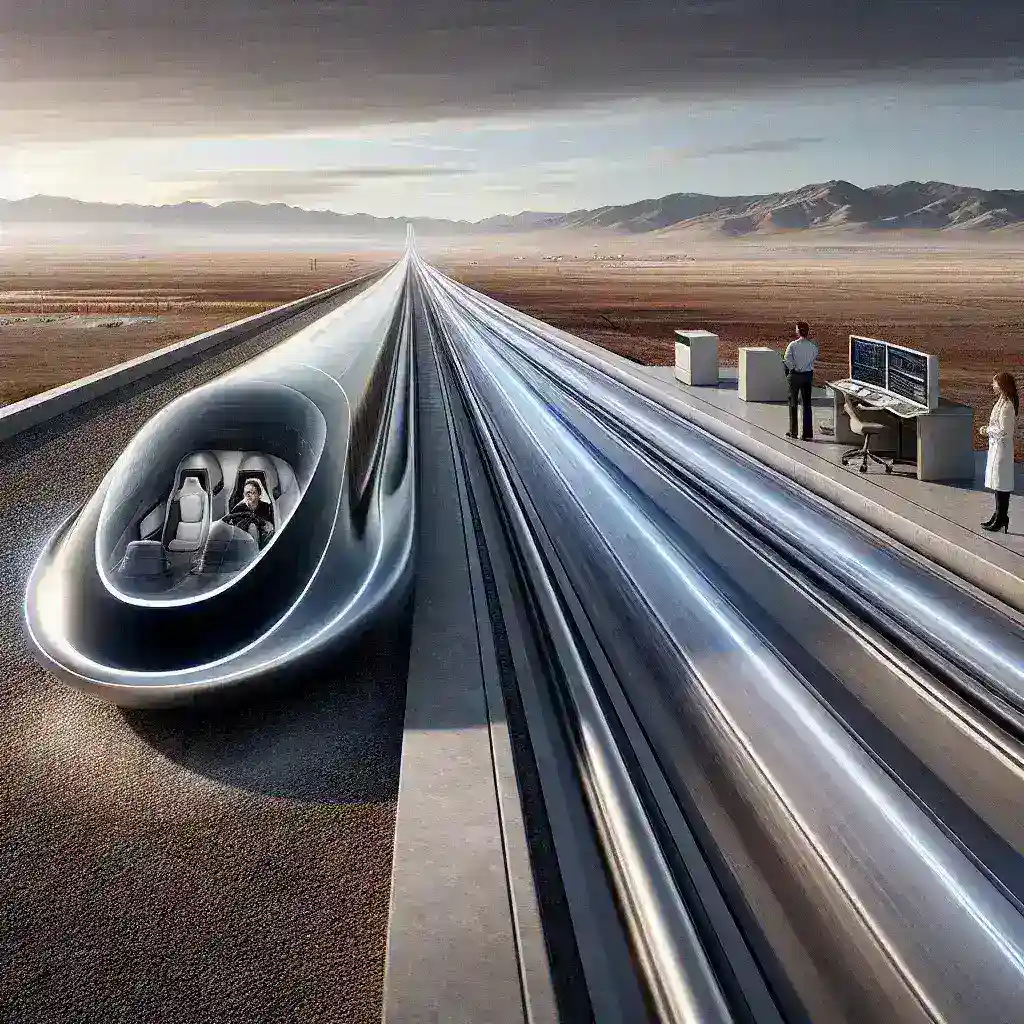
In the latest test runs, the Hyperloop achieved remarkable speeds of 700 mph, bringing us one step closer to realizing its potential for passenger travel. These tests have been conducted on dedicated tracks designed specifically for safety and efficiency, ensuring that the technology can be scaled for commercial use.
Key Features of the Test Track
- Safety Protocols: Rigorous safety measures are implemented to ensure the well-being of passengers during high-speed travel.
- Advanced Technology: The test track employs state-of-the-art technology to monitor performance metrics in real-time.
- Passenger Experience: Focus on passenger comfort includes smooth acceleration and deceleration, along with spacious pod designs.
Historical Context of the Hyperloop
The idea of high-speed travel isn’t new; however, the Hyperloop concept has taken inspiration from previous attempts at developing maglev trains and vacuum tube travel. In the early 20th century, ideas around pneumatic tubes were proposed, but it wasn’t until the 21st century that technology caught up with imagination.
Pioneering Technologies Leading to the Hyperloop
- Maglev Technology: Magnetic levitation trains have demonstrated the feasibility of high-speed travel with minimal friction.
- Vacuum Technology: Innovations in vacuum systems have improved the practicality of creating low-pressure environments suitable for the Hyperloop.
The Future of Hyperloop Travel
As we look ahead, the potential implications of Hyperloop technology on transportation systems are groundbreaking. When fully operational, passengers could travel between major cities in a fraction of the time it takes today.
Predictions for Hyperloop Adoption
Experts predict that within the next decade, we could see the first commercial Hyperloop routes operational. Cities that are currently exploring Hyperloop systems include:
- Los Angeles to San Francisco
- Dubai to Abu Dhabi
- Toronto to Montreal
Pros and Cons of Hyperloop Travel
Advantages
- Speed: Travel times vastly reduced compared to current air and rail options.
- Environmental Benefits: Sustainable energy sources and reduced carbon footprint.
- Scalability: Potential for extensive networks connecting global cities.
Challenges
- Infrastructure Costs: High initial investment for track and system construction.
- Regulatory Hurdles: Navigating the complexities of transportation regulations across various regions.
- Public Perception: Educating the public on the safety and feasibility of Hyperloop travel.
Real-World Examples and Case Studies
Several companies are racing to bring the Hyperloop to life, with notable developments from Virgin Hyperloop and Musk’s The Boring Company. Both entities have made significant progress in test tracks and prototype pods, showcasing the engineering and innovation behind this ambitious project.
Virgin Hyperloop
Virgin Hyperloop successfully completed its first passenger test in November 2020, marking a significant milestone in Hyperloop development. Passengers experienced speeds of up to 107 mph during the test, providing valuable data for further advancements.
The Boring Company
Elon Musk’s The Boring Company has been focusing on tunneling technologies and infrastructure needed for Hyperloop systems. Their work to enhance tunneling efficiency could pave the way for future Hyperloop routes.
Cultural Relevance of Hyperloop
The Hyperloop isn’t just a technological marvel; it symbolizes a shift in how society views transportation. As urbanization increases and cities become more congested, innovative solutions like the Hyperloop represent hope for a more connected future.
Expert Insights
Industry experts emphasize the need for continued investment in research and development to realize the full potential of Hyperloop technology. According to Dr. James Anderson, a leading transportation engineer, “The Hyperloop could redefine how we conceive of distance and travel, ultimately integrating cities in unprecedented ways.”
Conclusion
The Hyperloop test track’s recent demonstrations of passenger travel at 700 mph mark a significant leap toward the future of transportation. With its unique combination of speed, efficiency, and sustainability, the Hyperloop holds the promise of revolutionizing the way we travel. As technology continues to evolve, our dreams of seamless, high-speed travel become closer to reality, inviting us all to imagine a world where distance is no longer a barrier.





Leave a Reply